Protect crop potential
Root feeding and buried plants can reduce productive acreage and shorten stand life.
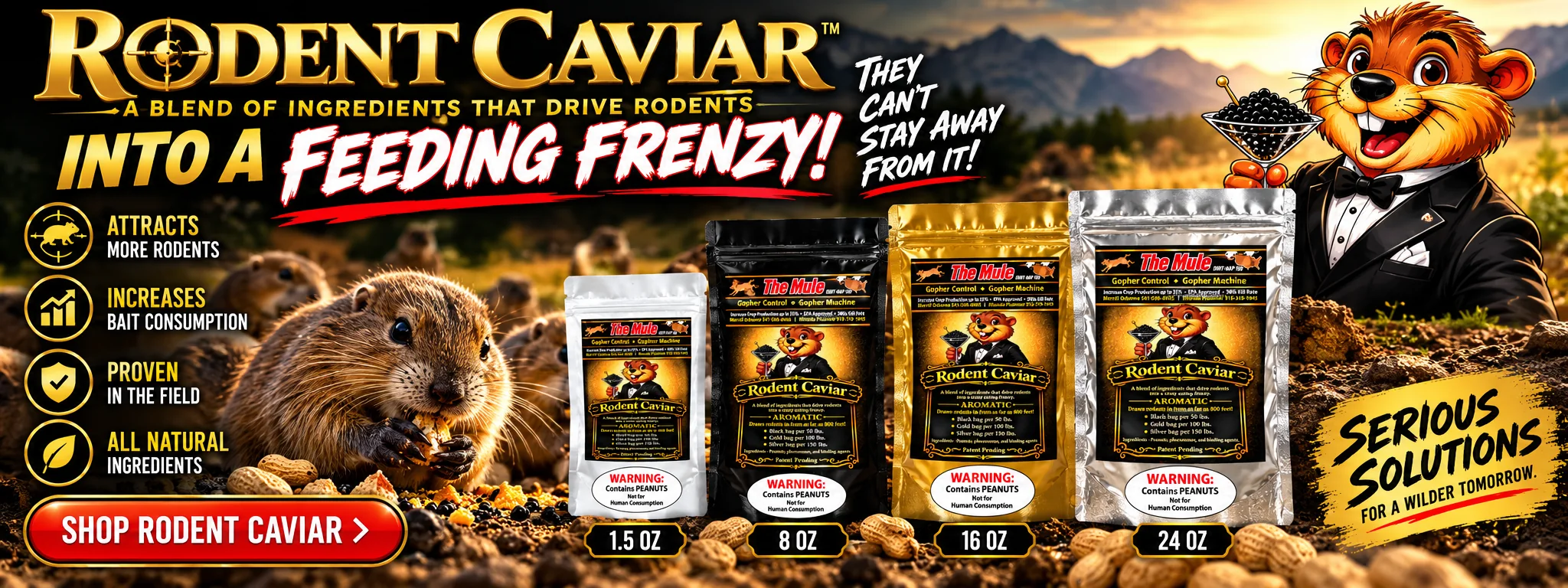
Eleven proprietary ingredients. One relentless objective: make compatible bait intensely appealing to target rodents. Rodent Caviar is designed to stimulate investigation and feeding interest, helping applicators get more value from properly applied bait. It is an attractant—not a poison. Don’t let untouched bait feed your frustration.
Watch Rodent Caviar in action
Farmers budget for water, fertilizer, seed, fuel and labor. Gophers can put every one of those investments at risk—damaging roots, interrupting irrigation, creating dirt mounds that interfere with harvest equipment and reducing the quality of valuable forage.
Root feeding and buried plants can reduce productive acreage and shorten stand life.
Mounds can introduce soil into forage and create extra wear on swathers and cutting equipment.
Burrowing activity may damage irrigation infrastructure and complicate water delivery.
Count repairs, labor, replanting and repeated control efforts—not only the crop consumed.
We didn't develop Rodent Caviar just to sell another product. We developed it because growers need better options. Our proprietary attractant is designed to improve the appeal of compatible bait within a properly managed rodent-control program.
EXPLORE THE AGRICULTURAL IMPACT ↗Rodent Caviar is an attractant, not a rodenticide. Reduced losses and cost savings are goals of effective rodent management, not independently established product outcomes.
Choose the size that fits your baiting operation. Always follow the product directions and the label of the bait being used.
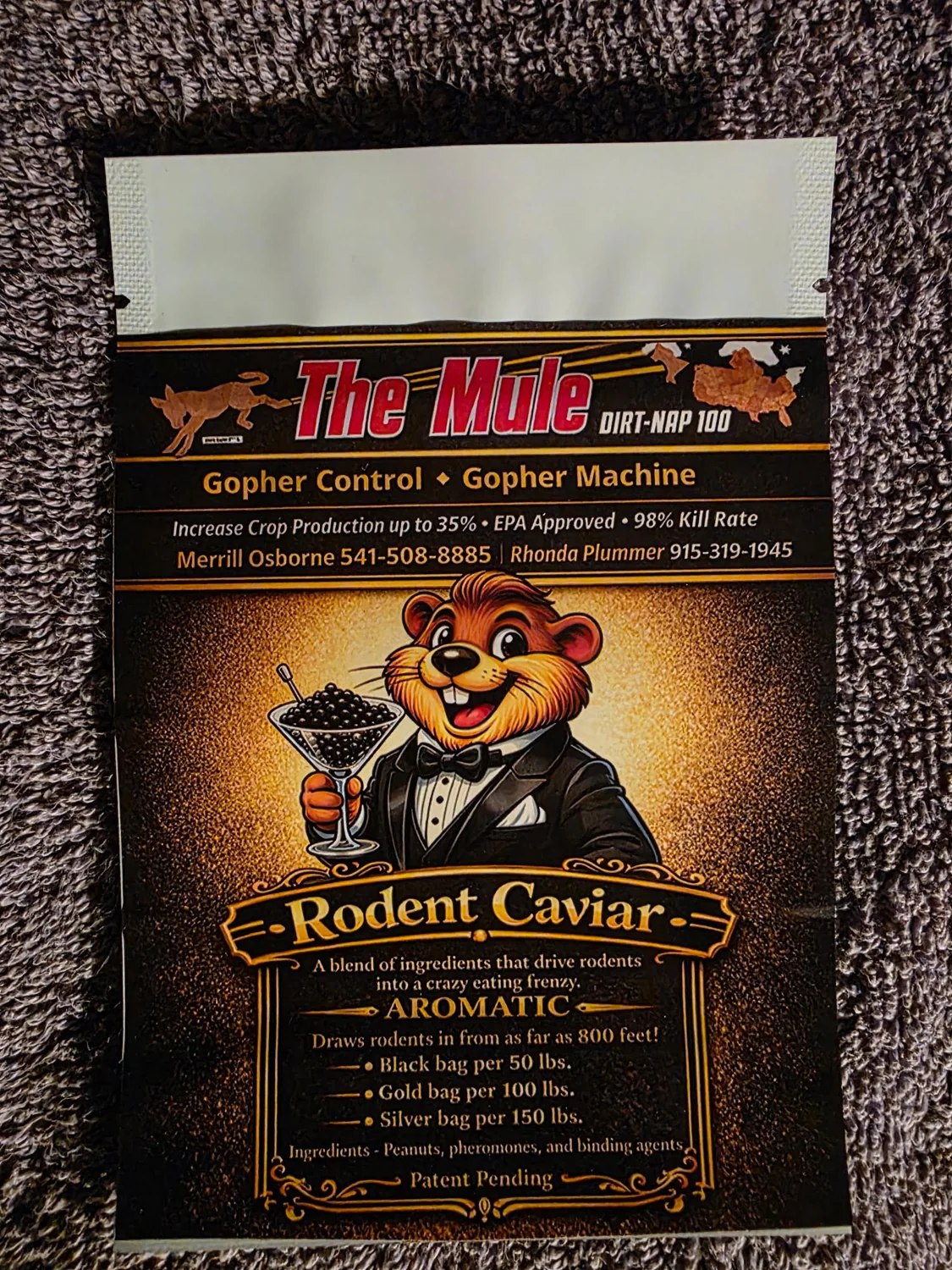
For smaller bait preparation. A convenient size for smaller bait batches. Mix 1.5 oz per 1 lb of bait, subject to final directions.
SHOP THIS SIZE ↗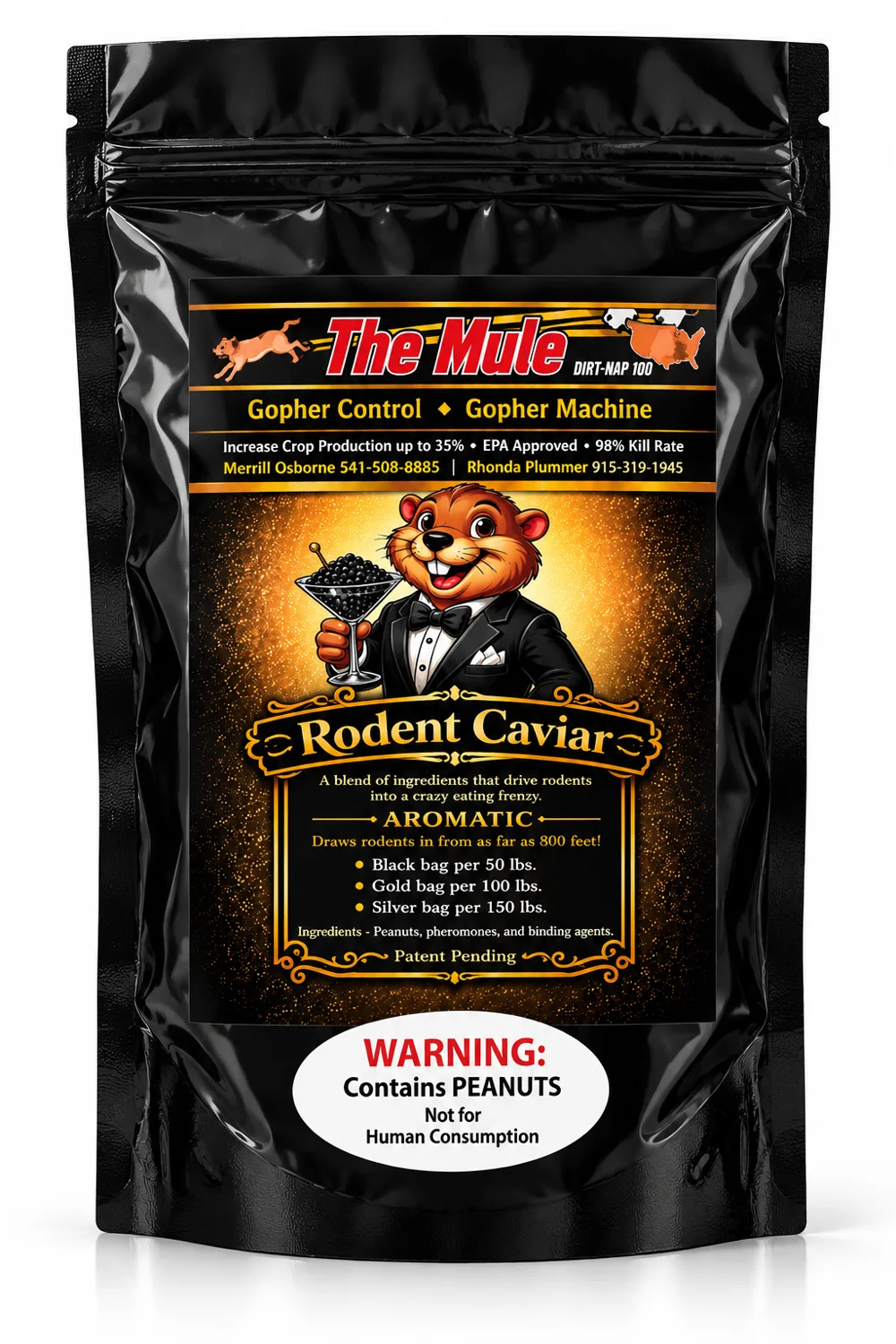
For preparing approximately 35–50 lb of bait, subject to final directions.
SHOP THIS SIZE ↗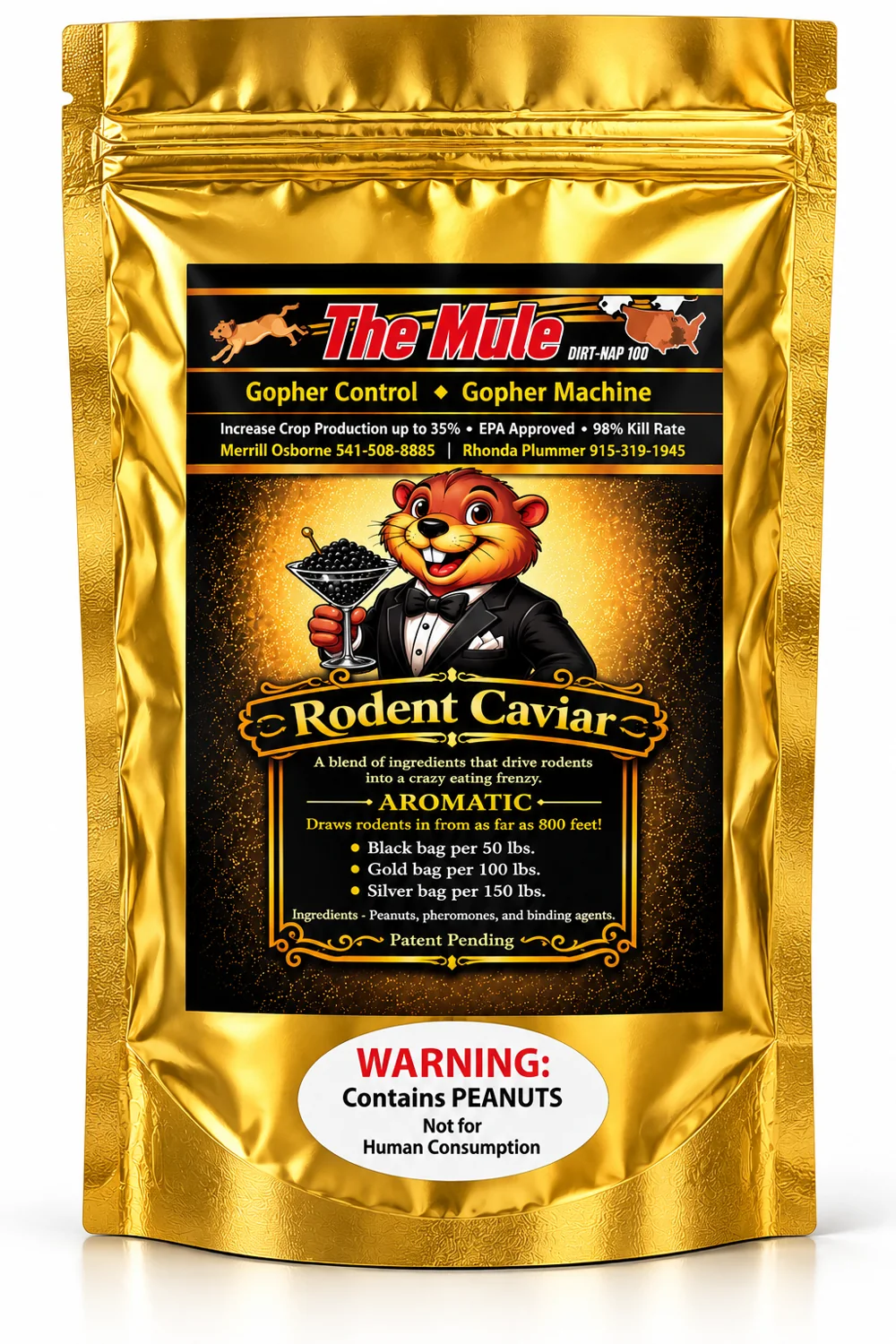
For preparing approximately 75–100 lb of bait, subject to final directions.
SHOP THIS SIZE ↗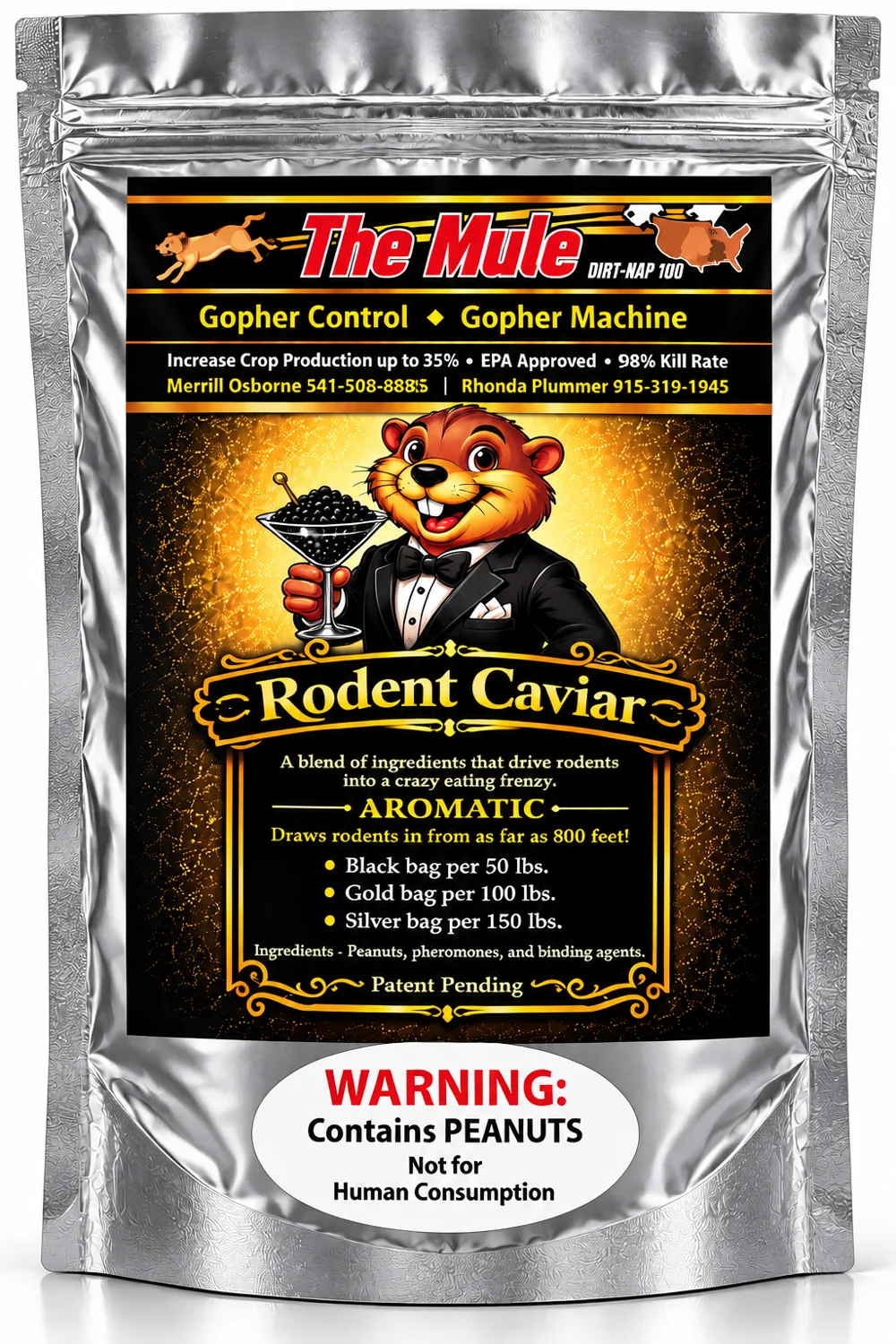
For preparing approximately 100–150 lb of bait, subject to final directions.
SHOP THIS SIZE ↗Contains peanuts. Not for human consumption. Rodent Caviar is an attractant, not a rodenticide. Some product imagery is promotional; refer to current approved packaging for final directions and warnings.
Mothballs and other strong-smelling materials are sometimes used in attempts to repel pests. Rodent Caviar takes the opposite approach: it is formulated to make compatible bait more attractive to target rodents, rather than to discourage them from approaching.
Eleven proprietary ingredients work together in a carefully developed blend. This is more than a generic fragrance: the formulation is designed around bait appeal, handling and field application. The exact recipe remains proprietary.
The feeding frenzy starts here. Less ignored bait. More feeding interest. Make every application count. We stand behind the intended feeding response with our 100% money-back guarantee when Rodent Caviar is used according to directions. This guarantee applies to the intended feeding response, not rodent elimination or the performance of any pesticide.
READ THE FIELD GUIDANCE ↗Built to invite investigation of compatible bait—not to mask an area with deterrent odors.
A sophisticated proprietary blend developed for bait attraction.
Use only when the rodenticide manufacturer's label permits the combination and application method.
Our oil-based formula coats bait when mixed. Company field testing found up to 10× longer active bait life in tested moisture-rich conditions.
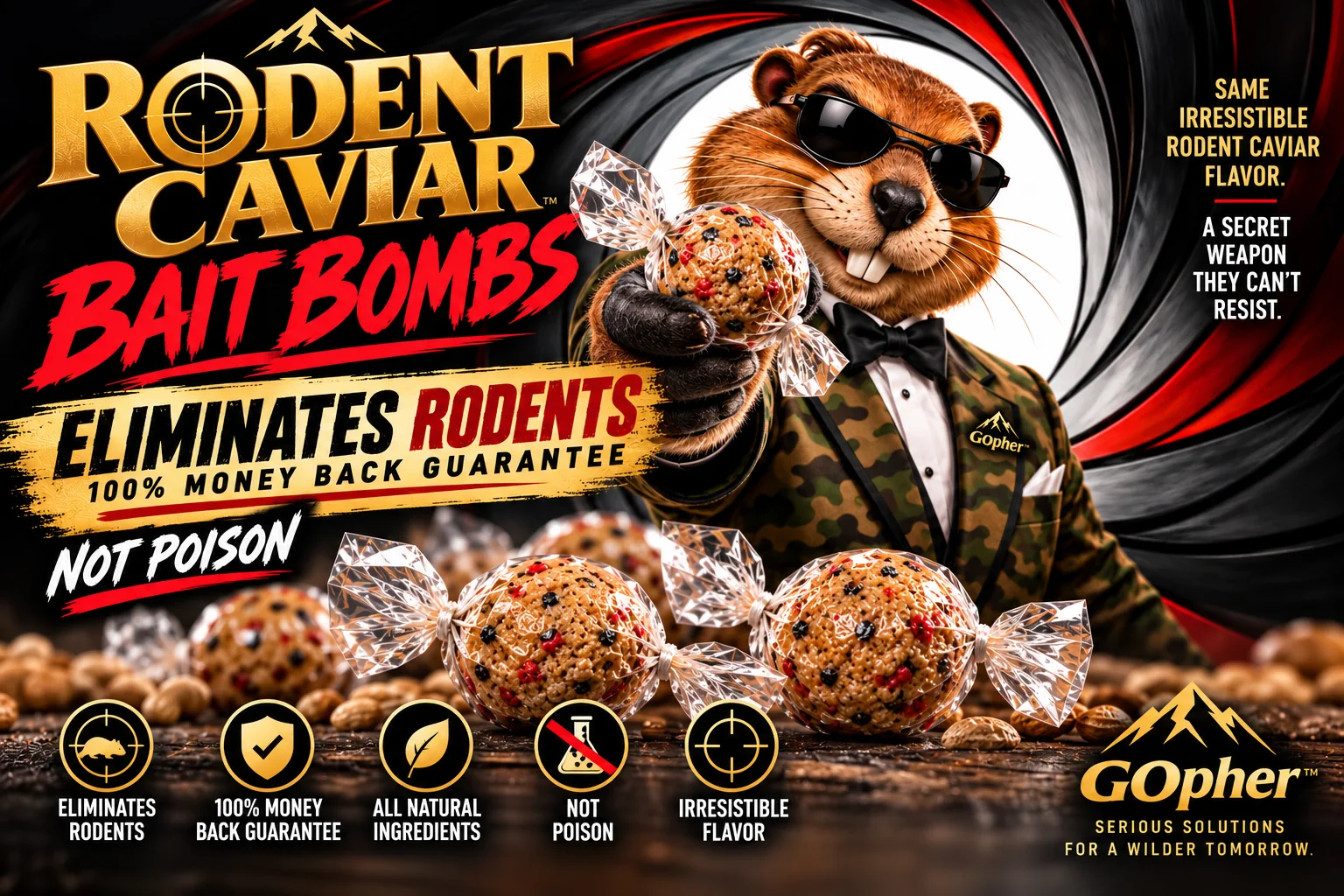
Small package. Big feeding-frenzy ambition. Rodent Caviar Bait Bombs bring our bold feeding-frenzy approach to convenient, targeted portions. Formulated to capture rodents’ attention through a distinctive proprietary attractant blend, they are designed for powerful bait appeal.
Know the difference: an attractant does not kill rodents by itself. Any lethal result depends on a separately approved rodenticide, its authorized use, and the product's final verified specifications. Availability and directions will be confirmed before orders open.
ASK ABOUT BAIT BOMBS ↗
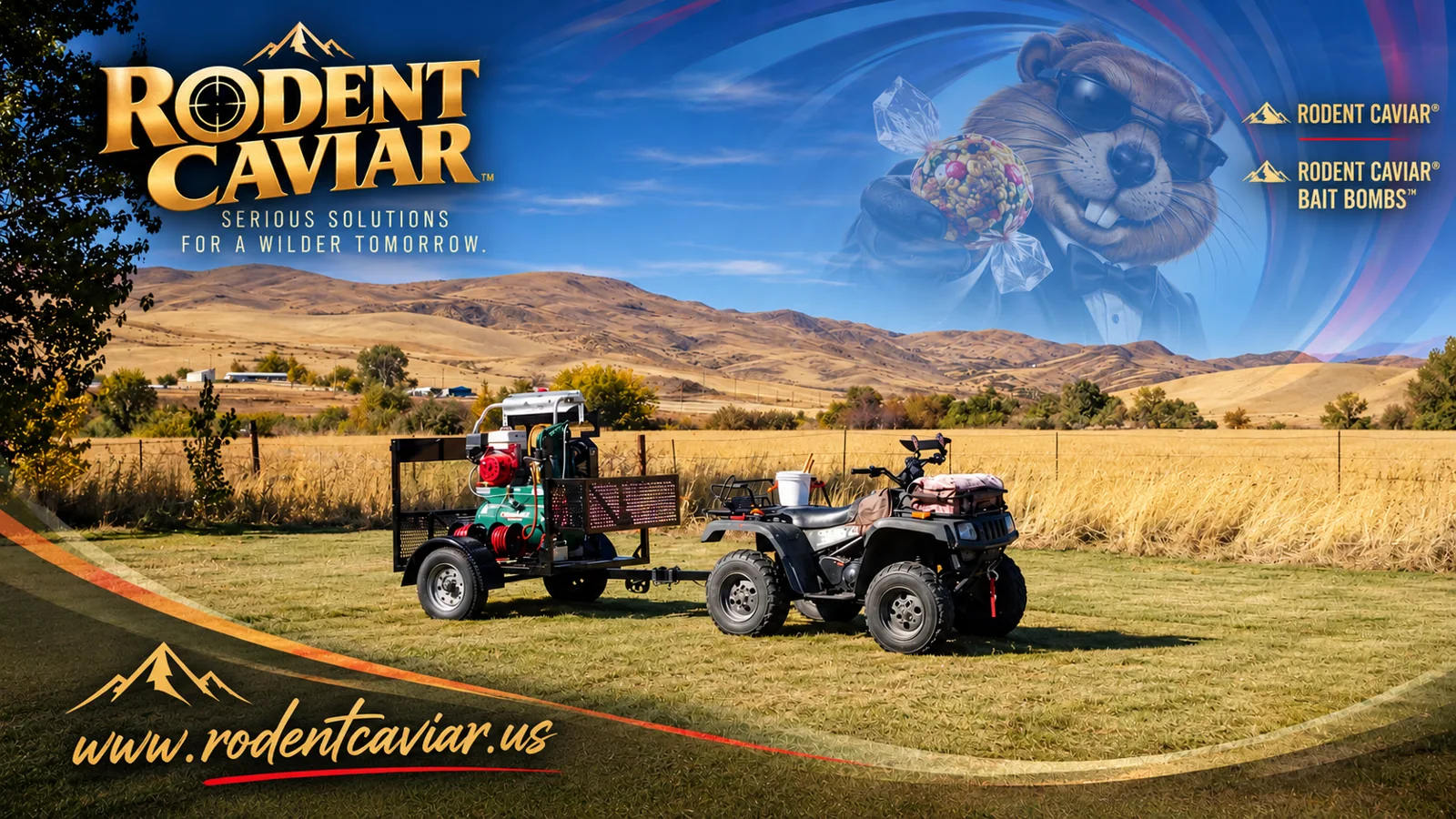
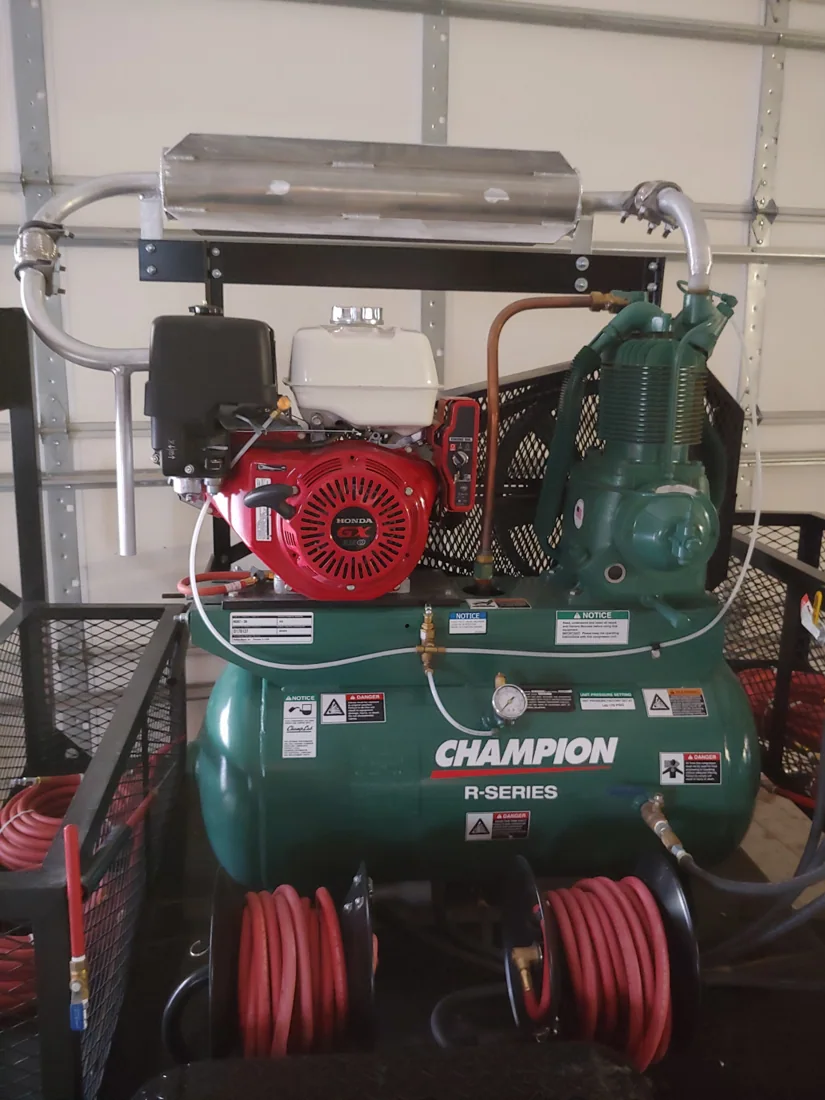
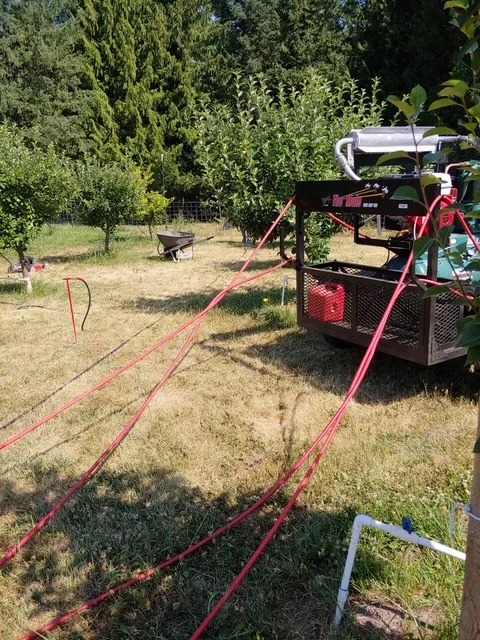
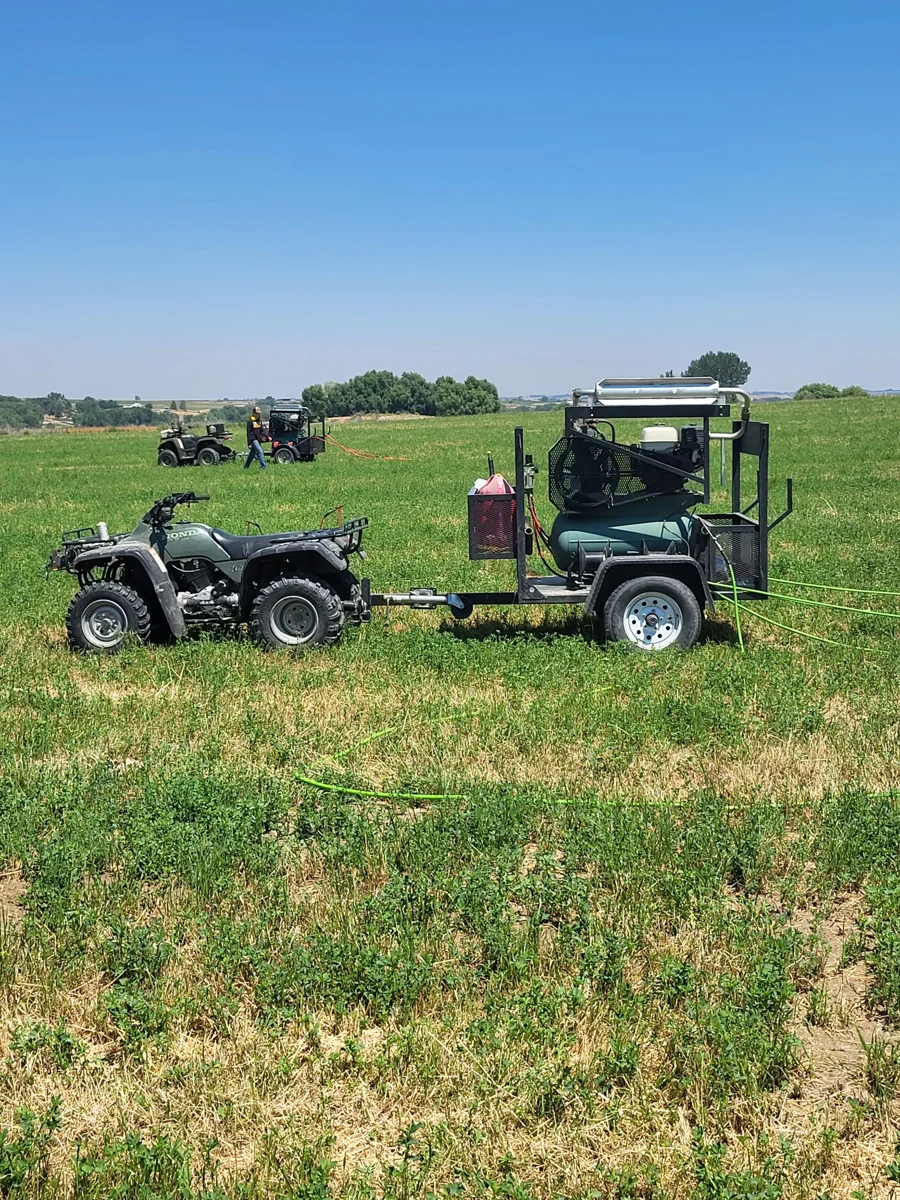
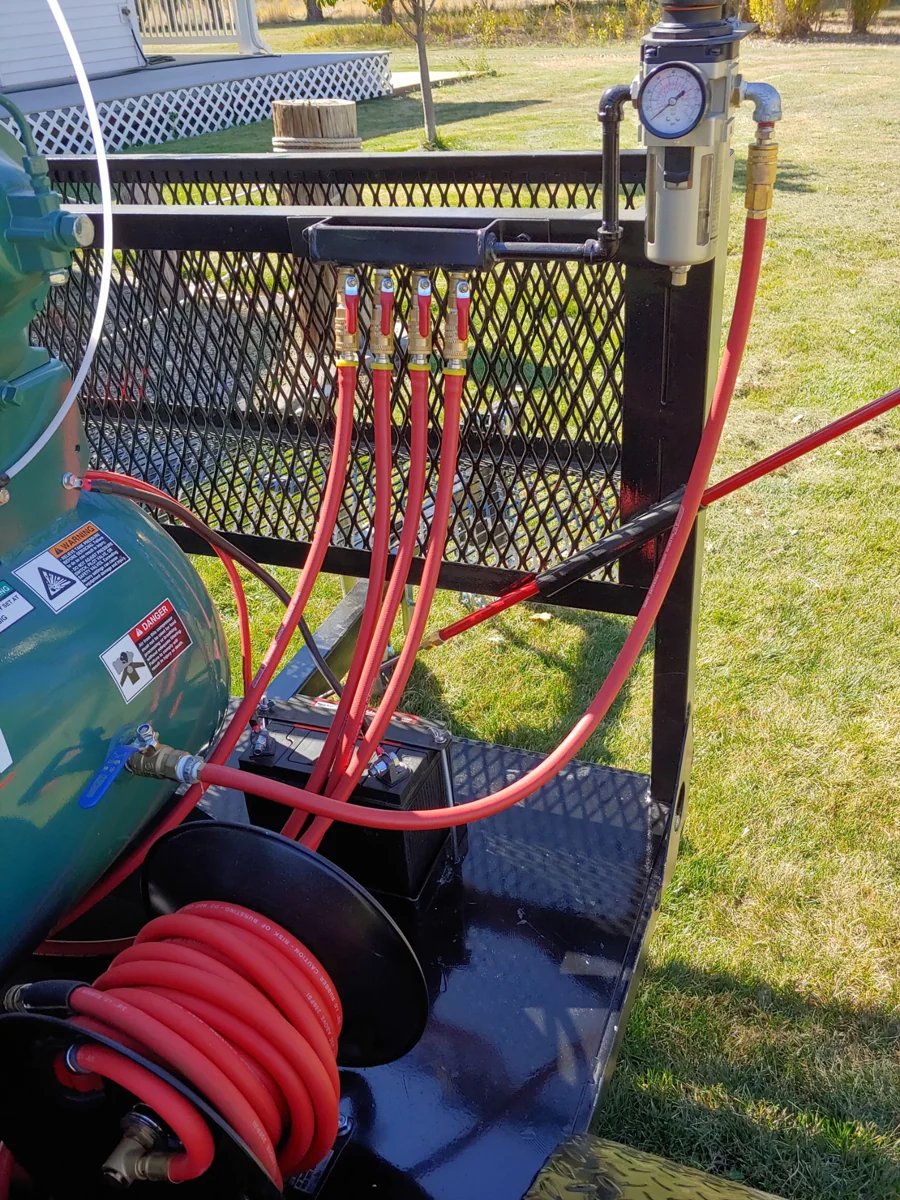
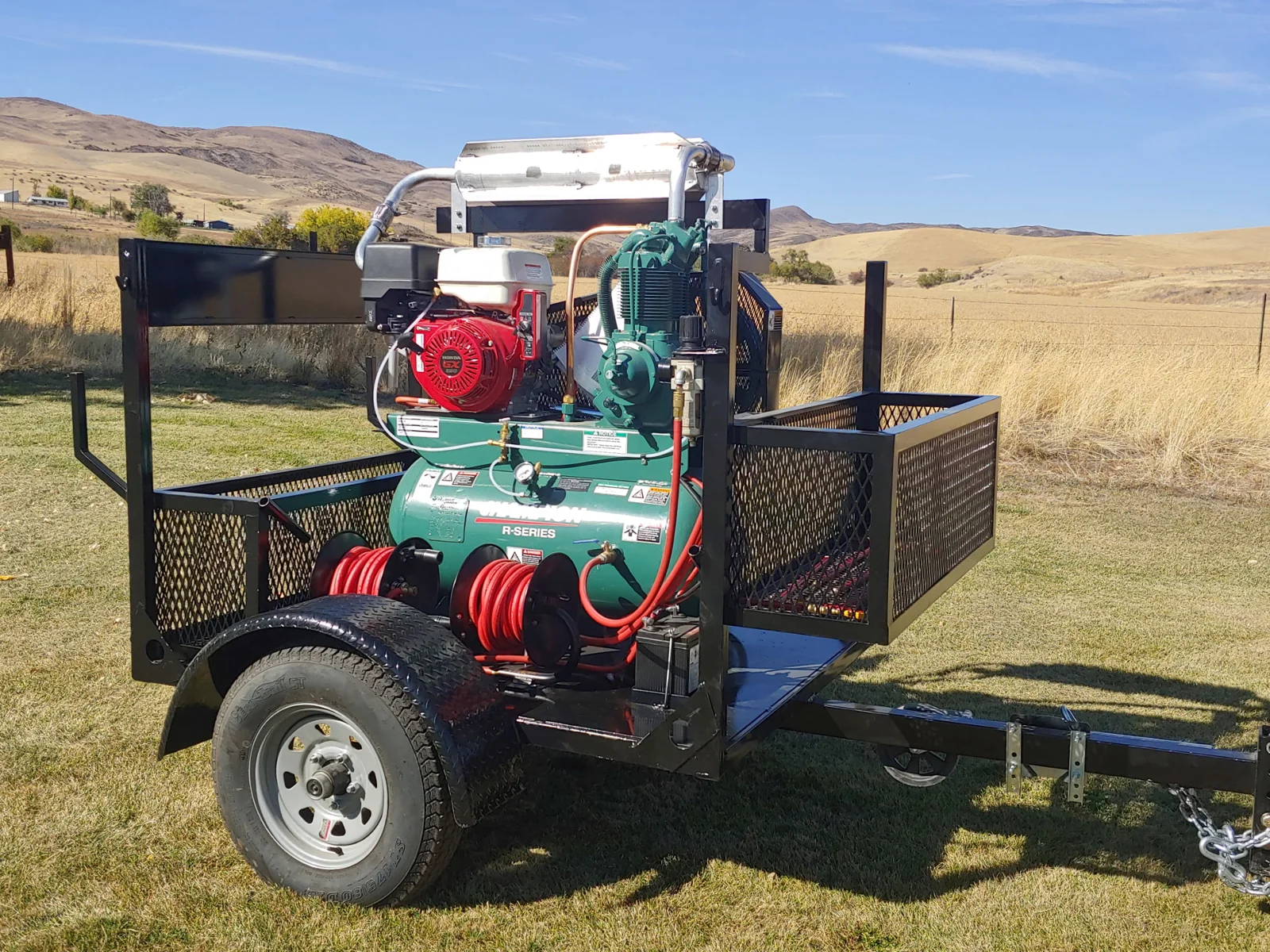
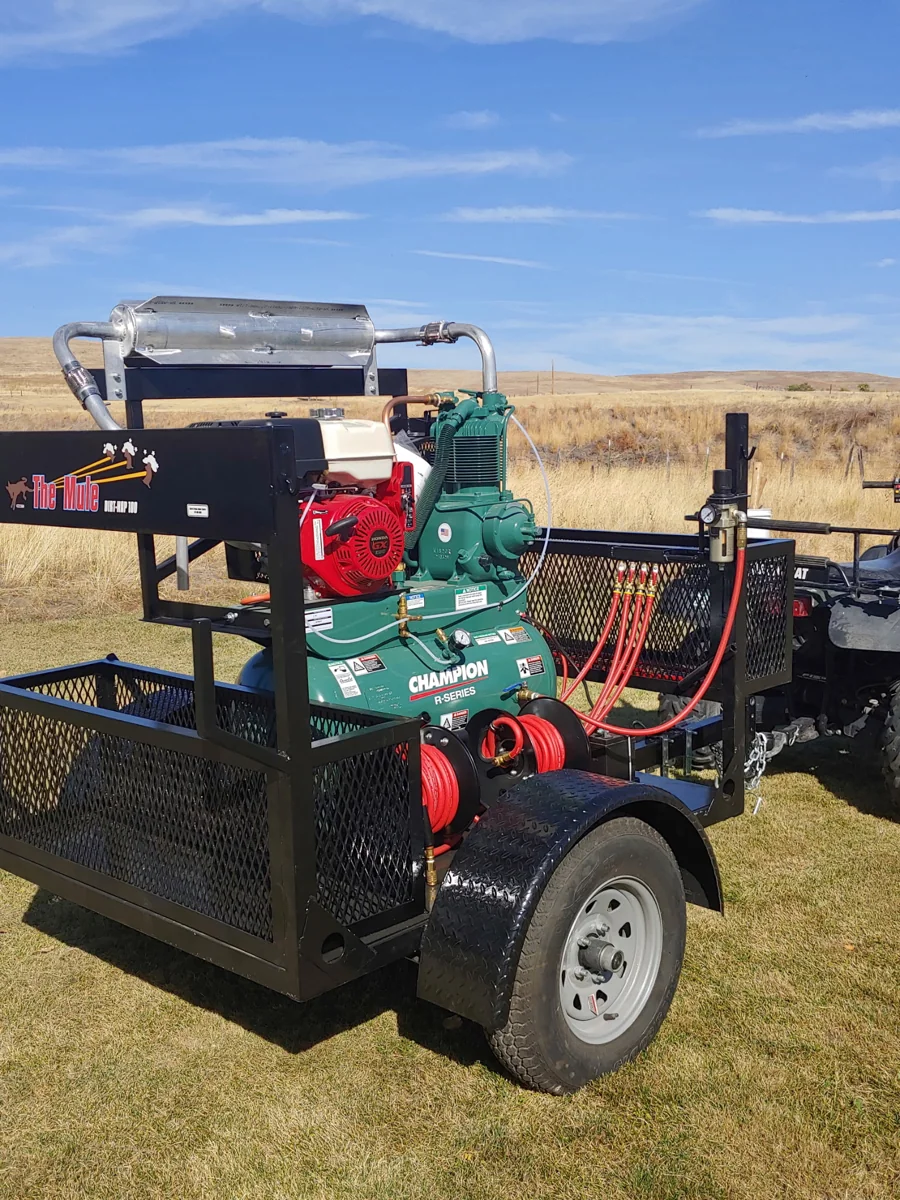
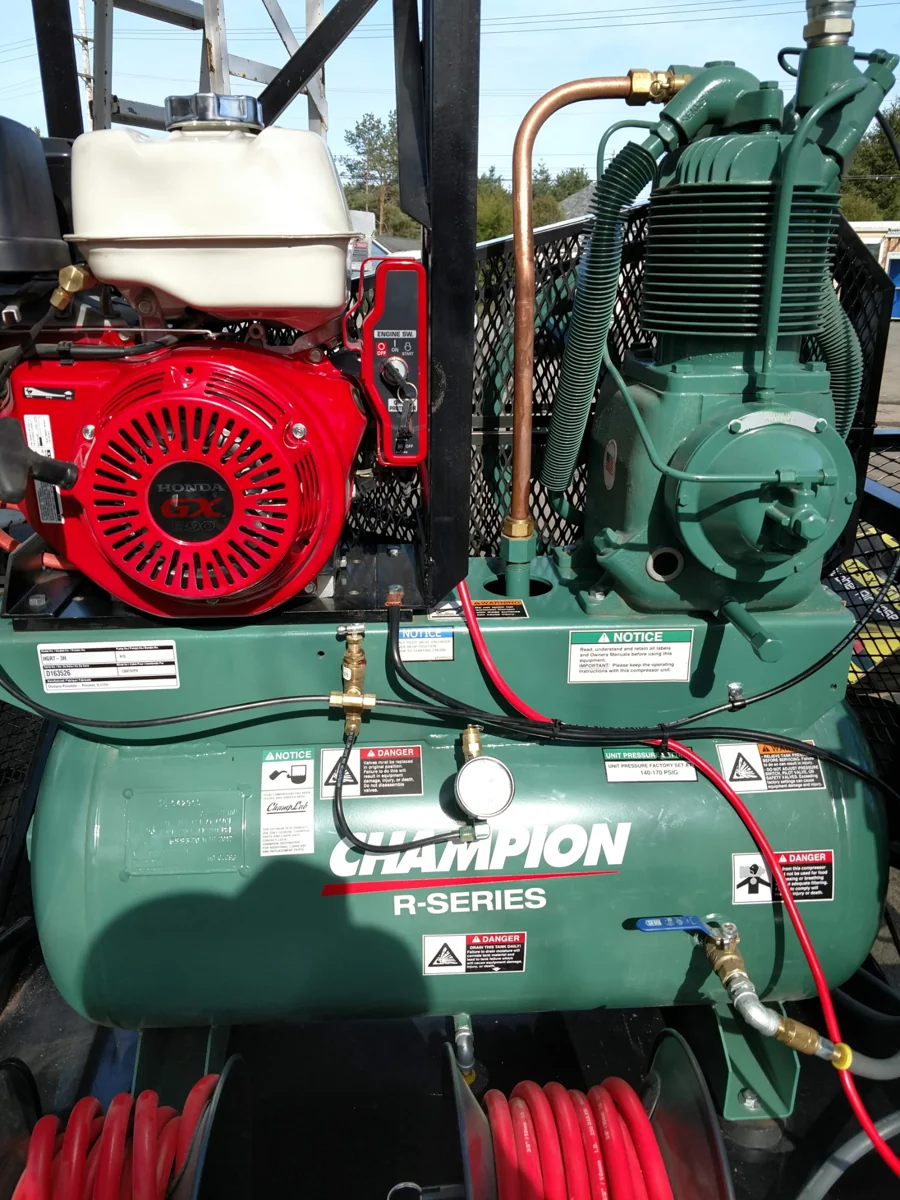
The Mule is our current field application machine, available for commercial buyers. Built for serious field work and designed to support rodent-management operations. Contact our sales team to discuss configuration and ordering.
Retail price: $17,995.00. Lead time is quoted at the time of order. Shipping within the lower 48 states can be accommodated; shipping costs are quoted at the time of sale. Email Sales@rodentcaviar.us for current lead time, shipping quotes, and purchasing information.
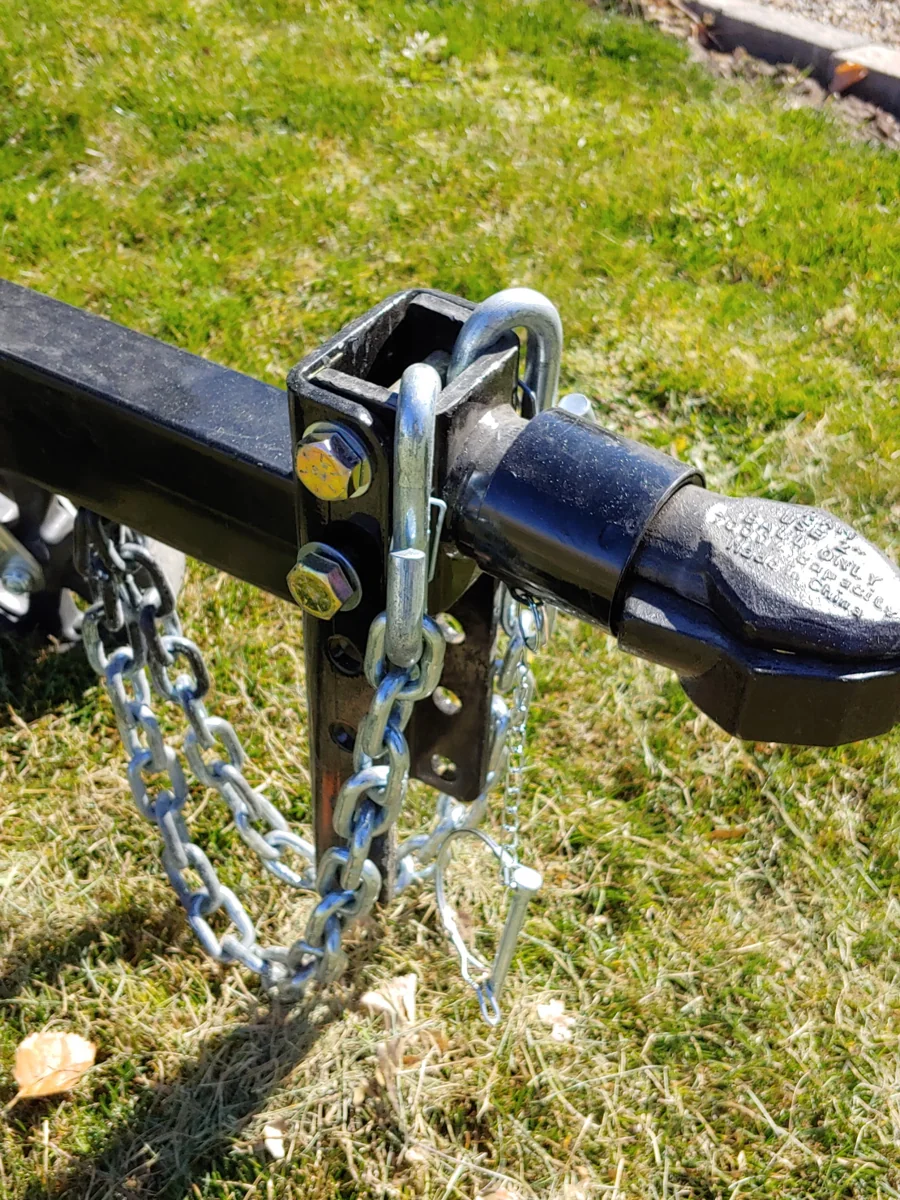
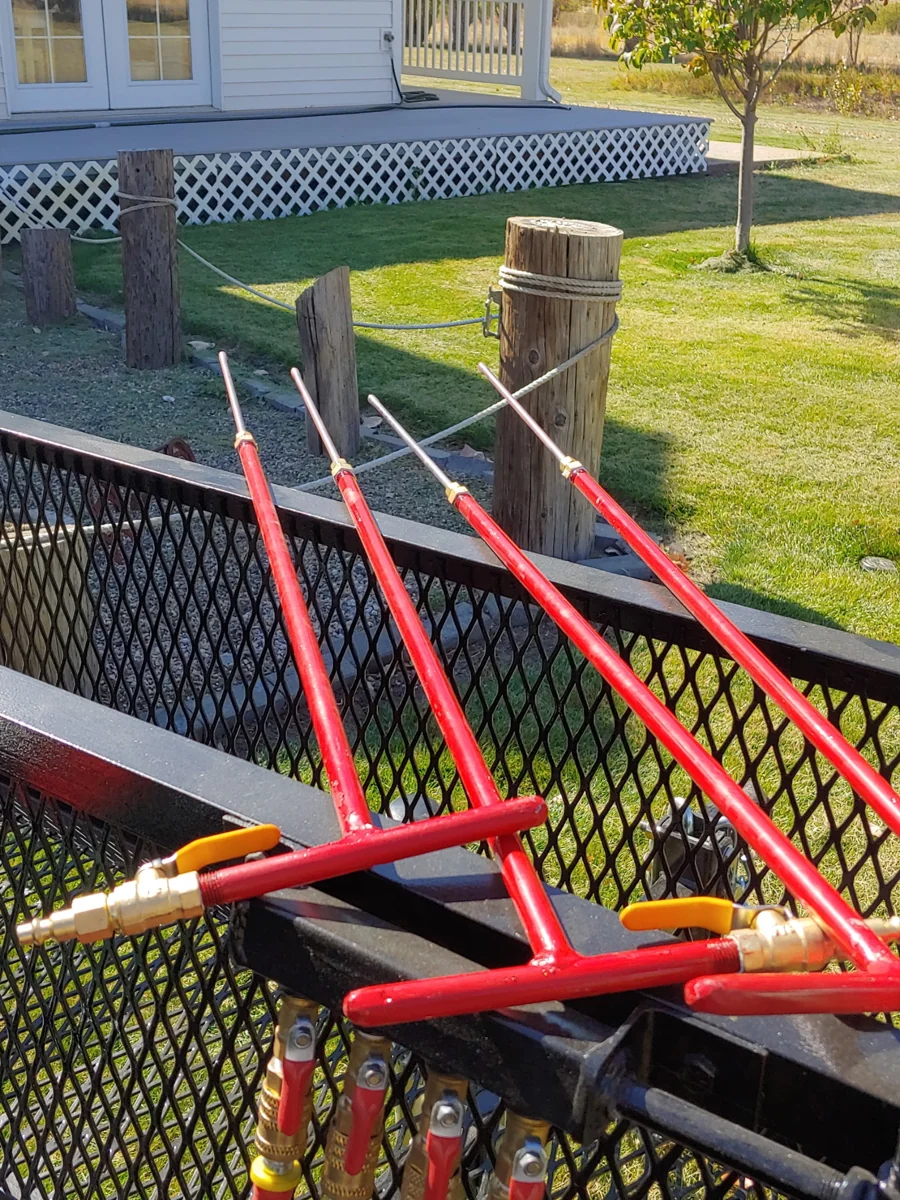
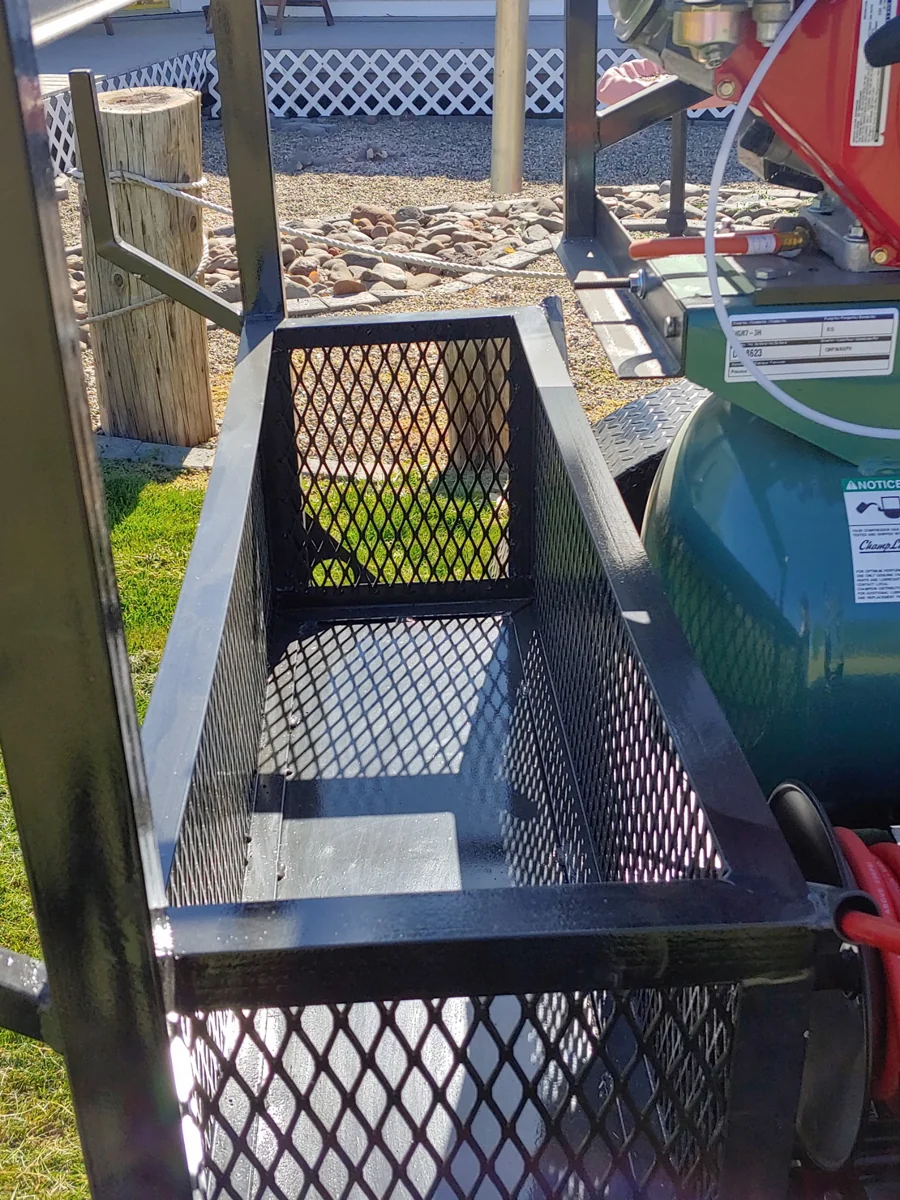
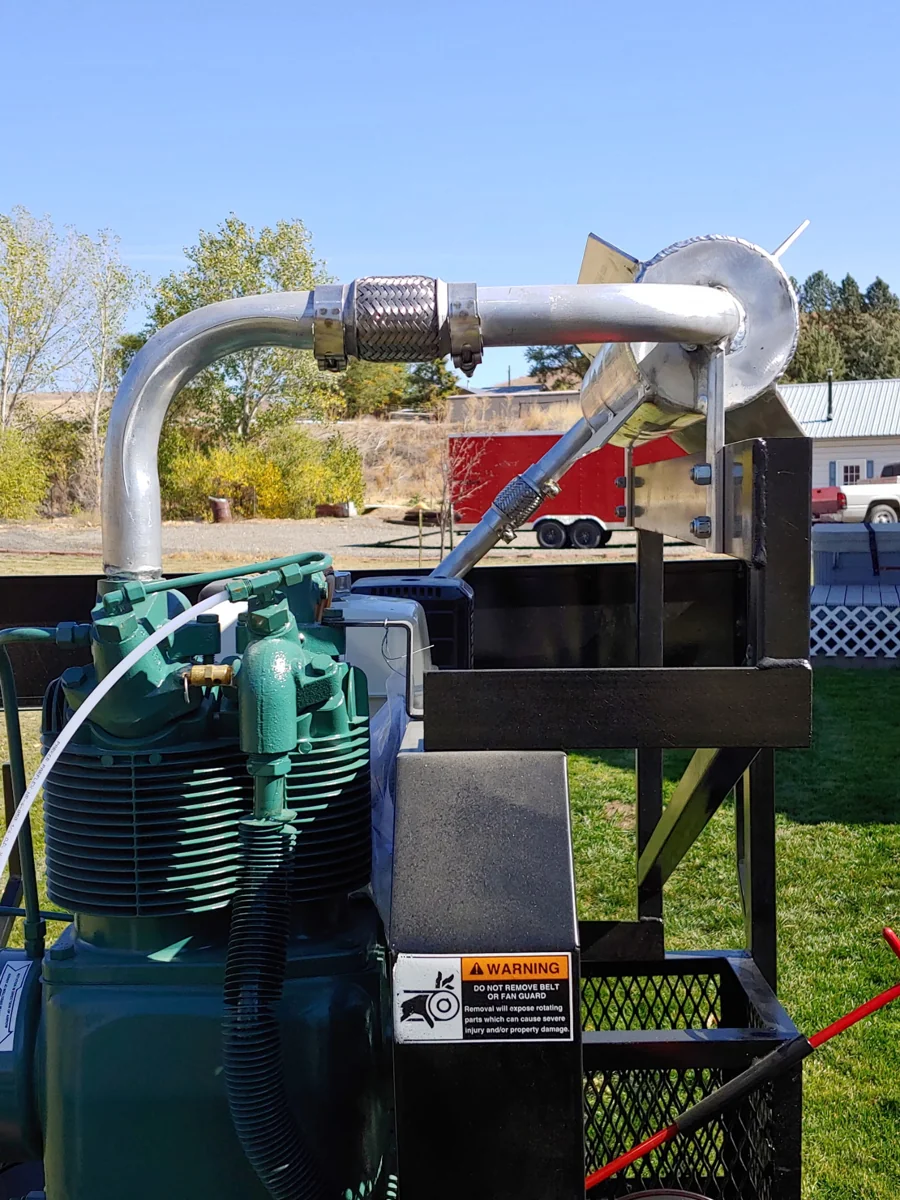
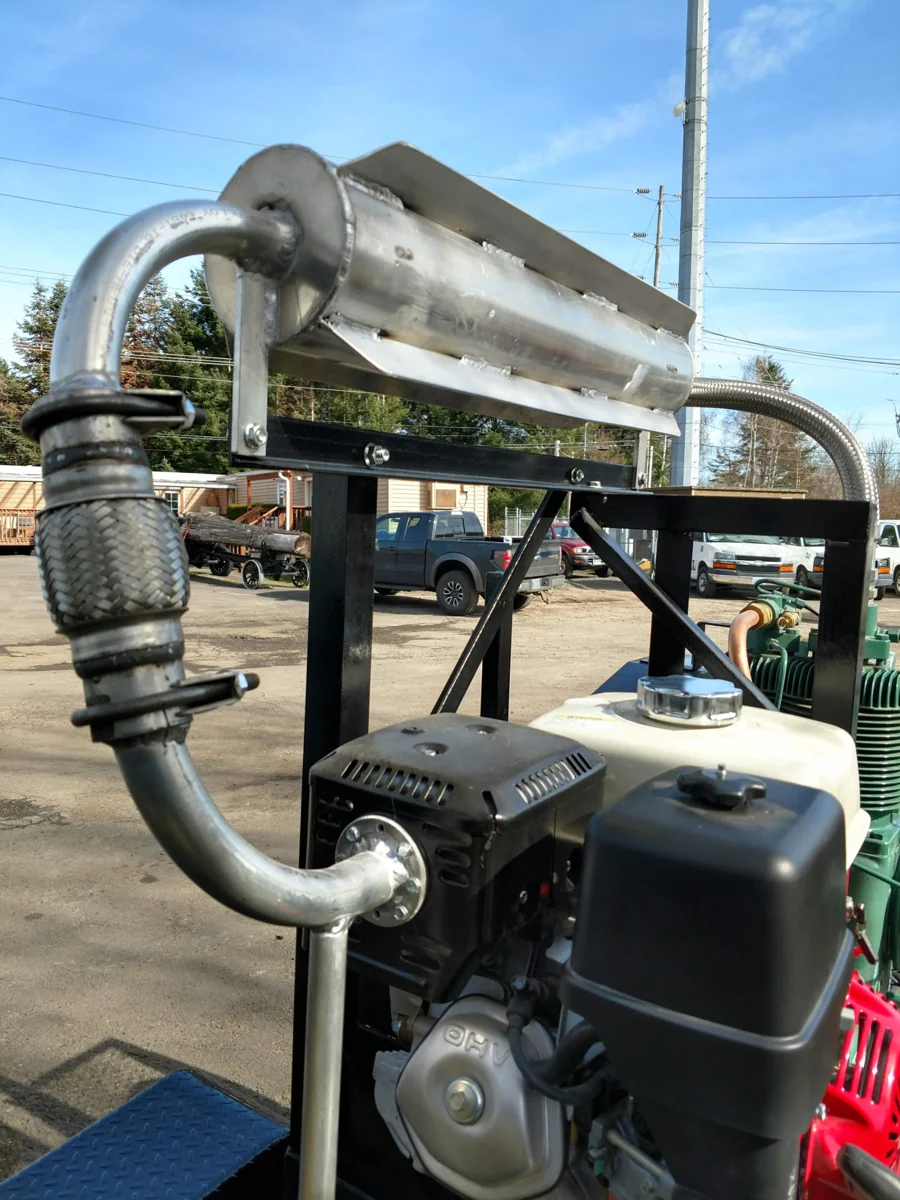
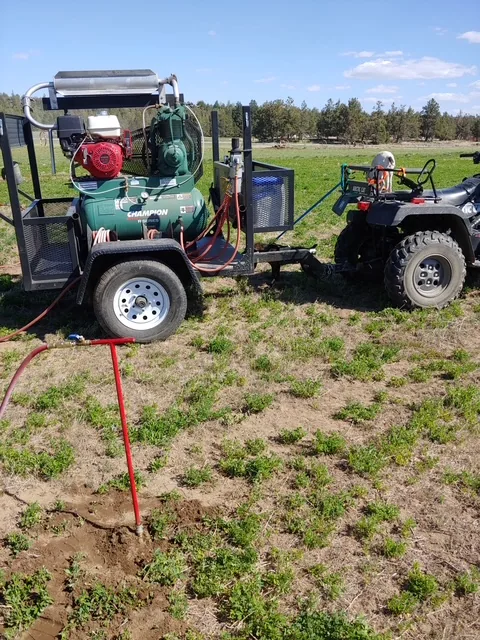 Actual equipment photograph: The Mule — current offering.
See The Mule, our current equipment offering, in the shop and in the field. These are actual equipment photographs—not renderings. Retail price: $17,995. Contact Sales@rodentcaviar.us for a lead-time and lower-48 shipping quote.
We believe the strongest endorsement comes from people dealing with rodent problems on their own property.
“This is the best product I have ever used. I had a major problem with ground squirrels and gophers in my front yard last spring, and now I have nothing. Each hole that I baited covered about a 500-foot area.”
Kenneth Neufeld · Customer testimonial · Published with permission
Individual customer experience; results vary by site, species, bait and application. The quoted coverage is a customer's estimate, not a verified product performance specification.
These are product highlights, not additional customer reviews.
Our proprietary 11-ingredient attractant is designed to encourage investigation of compatible bait—not to repel rodents.
From individual properties to large agricultural operations, choose a package size that fits the job.
Rodent Caviar is an attractant, not a poison. Use it only where compatible with the bait label and application requirements.
Tell us what you were dealing with, how you applied it, and what you observed. With your permission, your story may appear here.
A preview of our branded apparel. Check the online store for current styles, colors, sizes and availability.
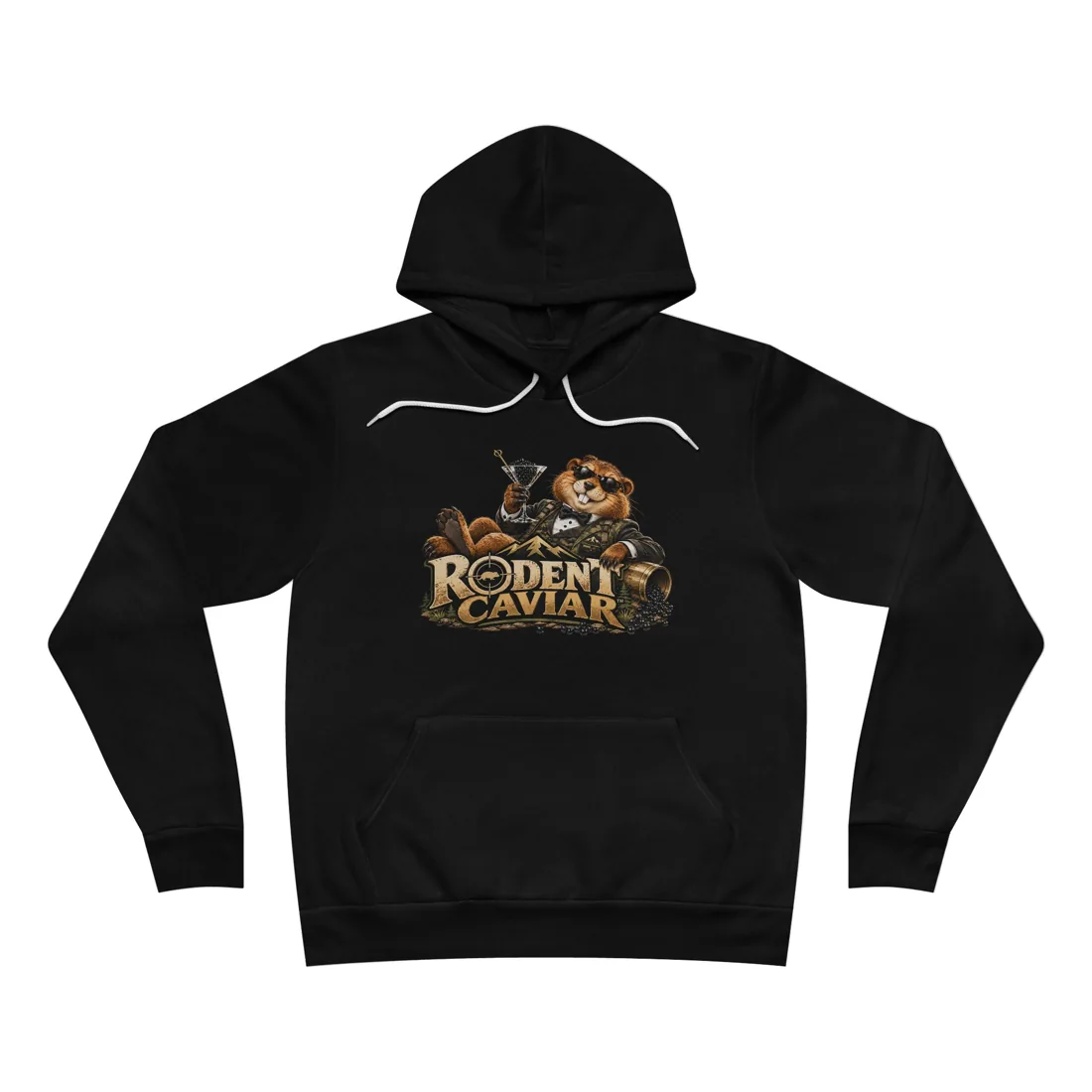
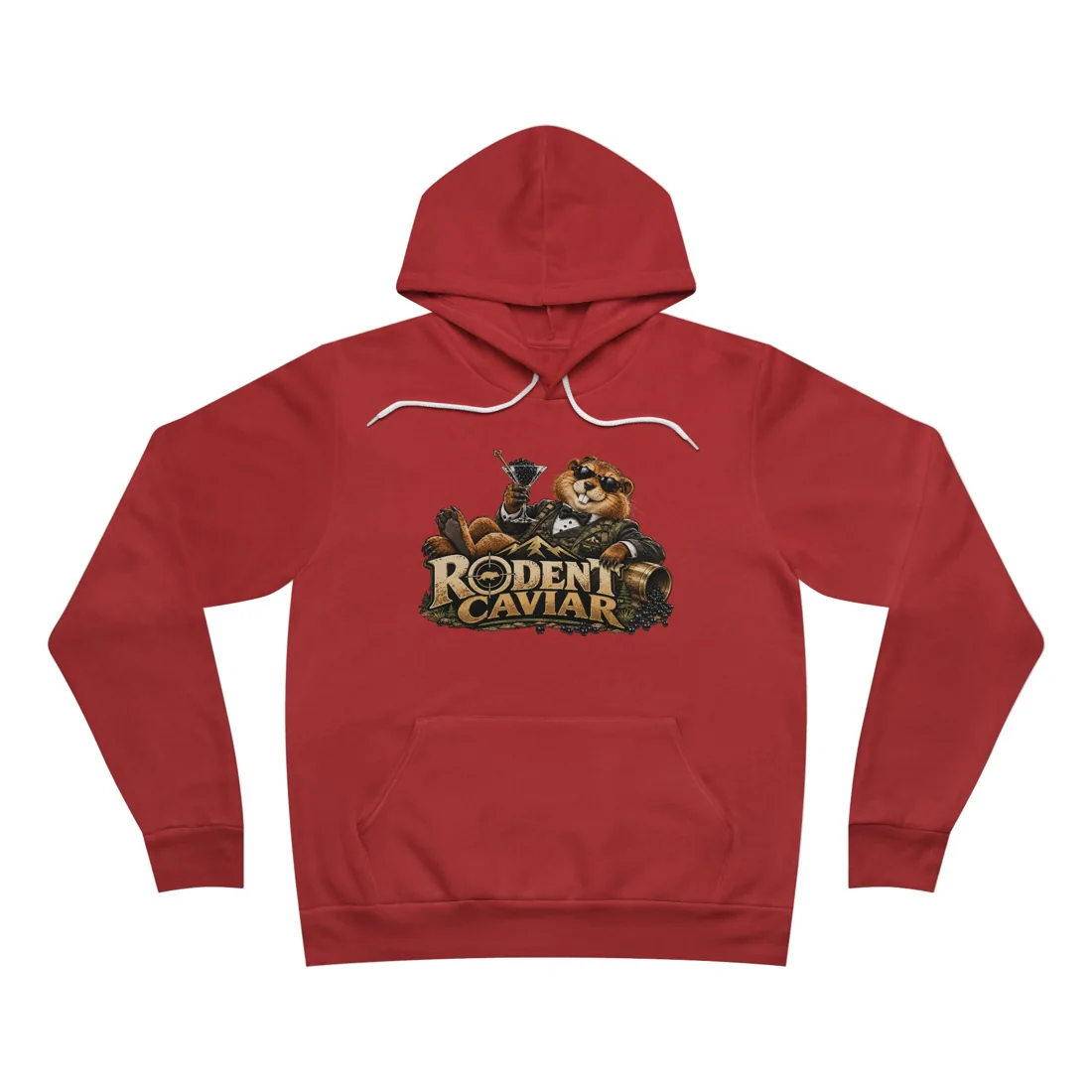
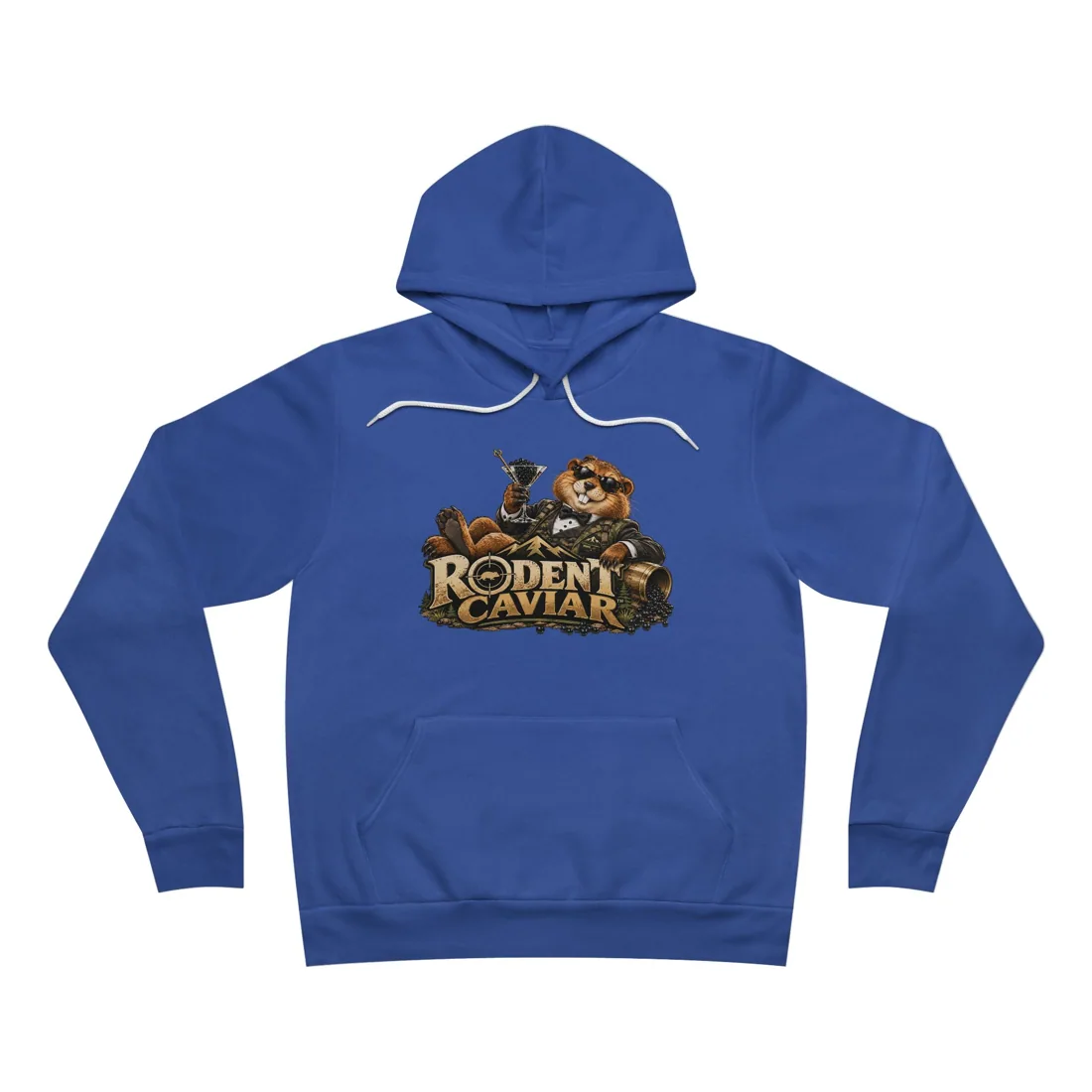
Rodent pressure can affect production well beyond the visible mound. The exact consequences depend on species, crop, infestation and local conditions.
Pocket gophers feed on roots and crowns, bury plants and create gaps in alfalfa and other forage stands. Replanting may require additional seed, preparation and labor.
Soil mounds can interfere with cutting equipment, increase wear and downtime, and introduce dirt into harvested hay. Delays matter during narrow harvest windows.
Burrowing can damage irrigation tubing and ditch banks, divert water and trigger repairs. Lost productivity may mean less return on water already delivered or pumped.
Soil contamination can affect forage cleanliness and marketability. Livestock operations may face added feed handling, testing or replacement expenses.
Monitoring, trapping, professional control, mound leveling, fuel, labor, field renovation and potential weed establishment add to the management burden.
Lower usable forage production can raise costs for dairies, ranches and equestrian operations. Some input costs may reach processors, retailers and consumers; price pass-through is not automatic or quantified here.
Crop and infrastructure damage → Higher cost per usable ton → More expensive forage → Livestock and food-production cost pressure → Possible consumer price effects
Enter your own assumptions to estimate potential gross crop revenue exposed to gopher-related yield loss. This is not an estimate of Rodent Caviar savings.
Rodent Caviar is a proprietary bait attractant intended to make compatible bait more appealing. It does not kill rodents by itself. Any rodenticide use must follow the registered pesticide label, including whether additives or mixing are permitted, and all required protections for livestock, pets, wildlife and people.
Our mission: Help growers evaluate better options for protecting crops, equipment, resources and profitability—without making unsupported promises about elimination rates or savings.
Explore independent extension resources on pocket gopher damage and integrated management:
Sources describe general rodent impacts, not independent testing or validation of Rodent Caviar performance.
Rodent Caviar is a proprietary, 11-ingredient attractant developed to increase the appeal of compatible rodent bait. It is not a poison and must never be confused with a registered rodenticide.
Repellents aim to keep animals away. Rodent Caviar is designed to draw target rodents toward compatible bait. Our intended feeding response is backed by a 100% money-back guarantee when the product is used according to directions.
Our formulation includes proprietary components and oils selected for the blend's physical and attraction characteristics. Claims about changing pesticide persistence require product-specific testing.
According to our field-use guidance, wetter soil can shorten the duration of Rodent Caviar’s attracting characteristics, while drier conditions may allow the attractant to go further. Our recommended product ranges account for varying field conditions. Use only the applicable product directions and follow the rodenticide manufacturer’s label.
Don’t feed your rodent problem with bait they ignore. Rodent Caviar is designed to make compatible bait more attractive while the selected rodenticide remains effective. Rodenticide performance can change over time depending on its formulation and environmental conditions. Always follow the rodenticide label for handling, placement, and use.
Rodent Caviar's proprietary oil-based formula lubricates and coats compatible bait when mixed, helping it repel water and resist moisture. In company field tests in moisture-rich environments, treated bait demonstrated up to 10× longer active bait life than the tested comparison bait.
OIL-BASED COATING — Coats bait as it is mixed.
MOISTURE RESISTANCE — Helps resist water and moisture.
NO POISON IN RC — Rodent Caviar is an attractant, not a rodenticide.
The 10× figure is based on company field testing under specific conditions. Actual bait life and performance vary by bait formulation, weather, and application. This does not establish a 10× increase in rodenticide potency or pesticide label-approved duration. Use only where the bait manufacturer's label permits mixing.
Follow the rodenticide manufacturer's label exactly. Apply products only as directed by the rodenticide manufacturer and applicable law. Use required bait stations and other safeguards to prevent exposure to birds, pets, livestock, children and non-target wildlife. Follow all directions for spills, unused bait and carcass disposal.
Rodent Caviar contains peanuts. Not for human consumption. Keep the attractant and all treated bait secured.
These historical product-to-bait ranges are provided for packaging context only. They are not directions to combine this attractant with any rodenticide. Confirm approved product instructions and pesticide-label compatibility before use.
Do not assume pesticide efficacy, environmental fate, mixing compatibility or application windows from marketing material. Refer to the current registered pesticide label and consult a licensed pest-management professional when appropriate.
Watch Rodent Caviar in action
A practical attractant concept for professional programs where burrowing rodents threaten landscapes, crops, and property.
Hay, alfalfa, forage production, and agricultural properties managing burrowing-rodent pressure.
Grounds teams protecting playing surfaces, irrigation corridors, and landscaped areas.
Public landscape managers seeking a consistent approach to bait preparation and placement.
Property managers and pest-control professionals addressing recurring burrow activity.
Rodent Caviar grew from an observation familiar to anyone managing persistent burrowing rodents: the challenge is not simply placing bait, but getting target animals interested in it. Founder Merrill Osborne set out to develop a distinctive attractant that could be added to existing baiting programs.
After years of field development and refinement, the team brought Rodent Caviar forward as a dedicated product line, supported by application equipment and a practical understanding of agricultural and property-management needs. Its personality may be playful—meet Freddy, our tuxedo-clad mascot—but the mission is serious: help professionals make their bait more appealing.
Today the business is led by three owners who bring product knowledge, operations, and commercial development together. We are focused on making the product accessible to individual property owners, professional applicators, agricultural operations, and distribution partners.
Rodent Caviar™ is a brand owned and operated by H&I Enterprises LLC. H&I Enterprises LLC is the company responsible for marketing, distributing, and selling Rodent Caviar™ products, including the Rodent Caviar White Bag 1.5 oz.
For retailer and brand verification inquiries: sales@rodentcaviar.us · 971-710-9232.
Product vision, original development, and field experience.
Business ownership and operational leadership.
Commercial strategy, customer relationships, and market development.
No. Rodent Caviar is marketed as an attractant to use with compatible bait. The bait or other control method—not Rodent Caviar itself—determines the rodent-control mechanism.
It describes the strong attraction we aim to create around compatible bait. Our intended feeding response is backed by a 100% money-back guarantee when used according to directions; this does not guarantee a particular kill rate or complete rodent elimination.
Do not use historical packaging ratios as pesticide-mixing directions. Follow current validated Rodent Caviar directions only when the pesticide label and applicable law permit the combination. Climate alone is not a reason to change labeled application rates.
Rodent Caviar contains 11 proprietary ingredients, including oils and other components selected for the attractant formulation. The complete recipe is confidential. Contains peanuts; not for human consumption.
Do not assume the product or bait mixture is pet-safe. Keep all materials secured and use bait stations and placement methods required by the bait label and local rules.
Species, habitat, food availability, and application conditions influence outcomes. Contact us with your target species and use case; we will not claim a universal success rate without supporting data.
We welcome commercial and distributor inquiries. Contact the team for ordering arrangements, availability, and account terms. Wholesale pricing is not published on this website.
Bait Bombs are a distinct Rodent Caviar offering; contact sales for current specifications and availability. The Mule is our current application machine, retailing for $17,995. Lead time and lower-48 shipping are quoted at sale. Email Sales@rodentcaviar.us for details.
No. Repellents are intended to deter animals. Rodent Caviar is formulated to attract target rodents to compatible bait; its purpose is the opposite of a deterrent.
Do not rely on a universal 48-hour rule. Pesticide persistence and environmental behavior depend on the specific product, formulation and conditions. Follow the registered label for use, handling, timing and disposal; do not assume treated seed becomes harmless afterward.
Rodent Caviar attractant alone does not kill rodents. Any lethal action depends on the separately approved rodenticide and its labeled use. Bait Bomb product specifications and claims require verification before launch.
The oil-based formula coats and lubricates bait during mixing, helping repel water and resist moisture. Company field tests in moisture-rich conditions found up to 10× longer active bait life than the tested comparison. Results vary. Rodent Caviar contains no poison; follow the bait label.
Questions about products, mixing, commercial orders, equipment, or distribution? Contact our team. For the fastest response, include your target rodent species, approximate property size, and how you currently use bait.